

Add up what a first order actually costs you. On a marketplace like DoorDash or Uber Eats, commission of 25–30% eats the margin. Through ads, you often pay $10–20 to acquire a new customer against $4–5 of profit on a $30 ticket. Either way, the first order is a paid audition. The business only works if a second order follows, and most restaurants leave that part entirely to chance.
The math behind repeat orders
A customer who orders twice a month at $30 brings in $720 a year. Keep them for three years and that one "new customer" turns out to be a $2,000+ account. A 10% lift in your repeat rate lands straight on the P&L: no extra rent, no extra staff, no ad spend, because the food and the kitchen are already there. We work through the full valuation in our LTV breakdown. The short version is that retention is the highest-leverage number you actually control.
Step 1: win the 30-day window
Most of retention gets decided early. A customer who hasn't reordered within roughly a month has usually filed you under "tried it, moving on." So plan the second order on purpose. About a week after the first order, send a "welcome back" offer, a $5 credit or bonus cashback that's good for 21 days, as a push or an SMS. The point isn't to subsidize the food. The second order is what builds the habit, and the habit is the real product. Once order two lands, drop the incentive: regulars stick around for consistency, and you don't have to pay them to.
The prerequisite is dull but non-negotiable: capture the contact on order one. Every first order should leave you a phone number and a marketing opt-in, taken at checkout rather than scribbled on a clipboard. If you didn't save a first-timer's number, you don't really have a customer at all. The 30-day window only exists for people you can actually reach.
Step 2: move repeaters to a channel you own
A repeat customer on a marketplace pays you the same 25–30% toll on every order, forever, and the platform keeps their contact details, so you can't even thank them. That business should sit on your own branded app or ordering website, where the commission is zero and every order fills out a customer profile you own. The conversion numbers make the case on their own: across 3M+ orders on our platform, branded apps convert up to 35% of visitors and ordering sites up to 15%, while a listing in a crowded marketplace converts around 3%. Someone who installed your app has already decided where next Friday's order is going.
See what moving them to your own app does to your margin — modeled on your real order volume.
Step 3: build a comeback loop instead of running campaigns
One-off blasts produce one-off spikes. What you want is a loop that runs every week whether or not anyone remembers to start it. The combination that works is cashback plus triggered messages. Every order earns 8–10% back in credit, and the system nudges on its own: "your usual?" timed to the customer's own ordering rhythm, "your $4.60 expires Friday" before the credit lapses, "it's been a month" on day 30. Each of those messages is triggered by something the customer actually did, which is why triggered sends beat broadcasts everywhere anyone measures them. We cover the cashback math and the mechanic options separately. What matters here is that the loop lives inside your marketing stack and runs automatically, because a loop you have to remember to run isn't much of a loop.
Step 4: fix the delivery experience
No push notification wins back a customer whose food showed up cold and 50 minutes late. Retention marketing only works on top of solid operations: honest delivery estimates, live courier tracking, and dispatch that doesn't leave orders sitting around waiting for a driver. It's the unglamorous part, and it decides more than any campaign will. A customer's odds of ordering again drop with every extra ten minutes they spend watching a map. If your delivery times wobble, fix logistics before you spend a dollar on retention, or you're just advertising a bad night.
Step 5: put repeat rate on the weekly dashboard
Check three numbers every Monday in your reports: the share of this week's orders that came from returning customers (delivery-heavy restaurants should be pushing past 50%), the median days between orders, and the number of customers who've just crossed 45 days without ordering. That last one is your early warning. Those people haven't left yet, and one win-back message this week does more than ten sent next quarter. You manage the numbers you look at every week; the ones you only check each quarter you tend to notice too late. The whole step costs about fifteen minutes on a Monday morning.
Stripped down, the plan is four moves: get the second order to happen, move it onto a channel you own, let an automated loop produce the third, and keep operations good enough to deserve the comeback. All of it runs on one system that keeps working while you're busy in the kitchen, no marketing department required.
One thing to do this week: work out your repeat rate for the last 90 days. If it's under 40%, start with the 30-day window. It's the cheapest fix, and it pays back the fastest.
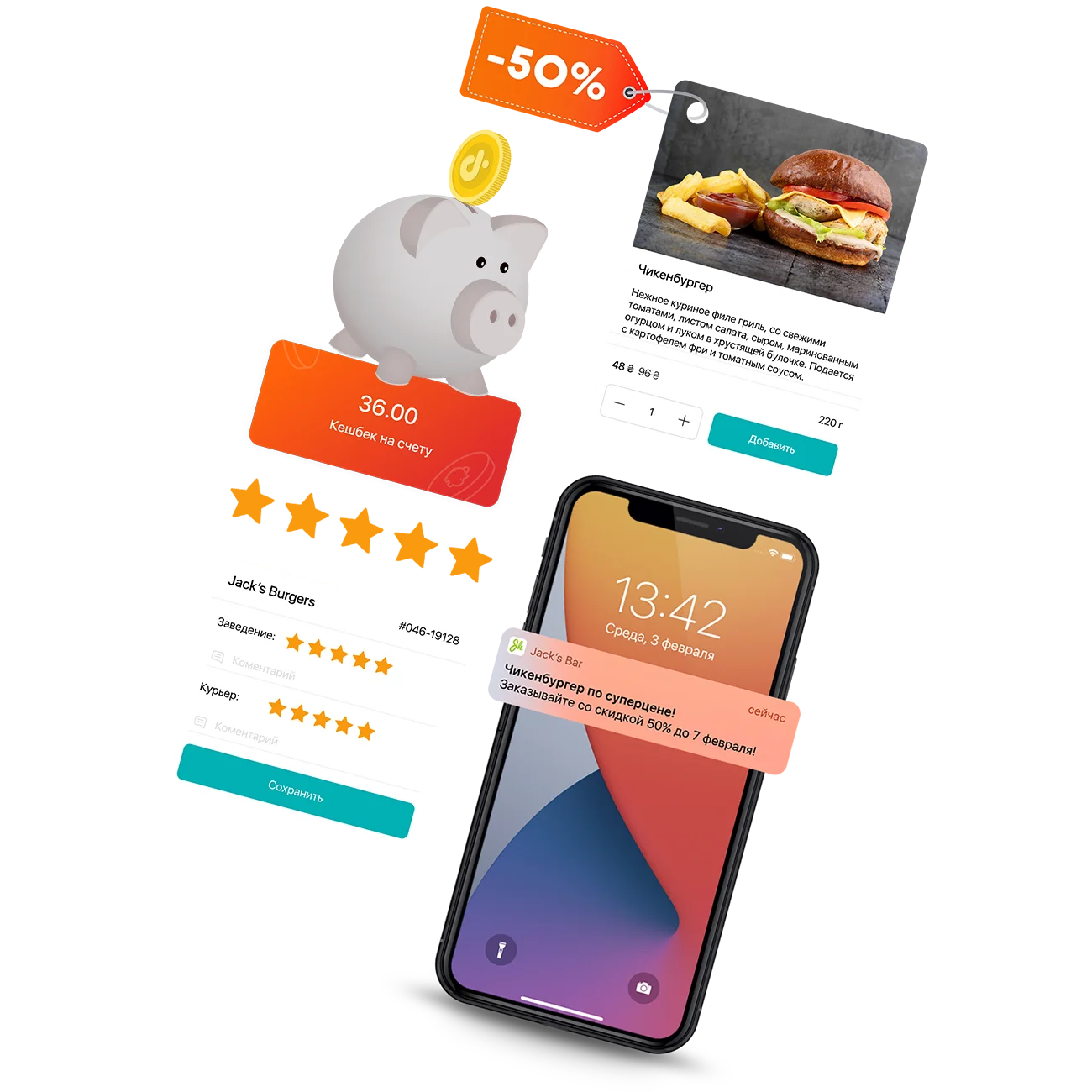
App, cashback, triggered campaigns, and weekly repeat-rate reports — launched in about two weeks.